
• English English Engels en
  • Nederlands Nederlands Nederlands nl
bel +31629574670
LIEVE GEUENS
  • home
  • biografie
  • recensies
  • foto’s
  • blog
  • videos
  • contact & info
  • Klik om het zoekinvoerveld te openen Klik om het zoekinvoerveld te openen Zoek
  • Menu Menu
  • Link naar LinkedIn Link naar LinkedIn Link naar LinkedIn
  • Link naar Facebook Link naar Facebook Link naar Facebook
accent method, Adem, ademsteun, breath support, consonants, diaphragm, Gerrit Bloothooft, lax vox, legato, Menselijke stem, reinforcing your sound, resonans box, semi-occlussion, singers, stemweg, straw, vocal chords, vocal folds, vocal tract, voice exercises

lip trill, semi-occlusion, straw and lax vox

This post is written as an extended answer to questions Hyoseon Kim asked about the “lip trill” (or lip roll) exercise.

First off all: You can do the “lip trill” exercise (“brrr”) with or without voice. When you do them without using your voice (without closing your vocal folds), you will most of all train your breath muscles.

A nice detail I guess you like to know:

The way you make your lips vibrate is exactly the same way you make your vocal chords vibrate. (see the first post: “what is this thing called voice”). But since  your lips have more mass than your vocal chords, your diaphragm will have to work harder to build up the air pressure when you do the lip-trill…

When you do this exercise, make sure the sound is made with your lips and not with your tongue. Also make sure that the muscles of your jaw, cheek and lips are not tensed and that there is some space between your molars.

When there is too much tension on your lips or on your cheeks you can put some fingers on both sides of your mouth. This will relax the muscles. There is a lot to find on youtube about this lip trill. The presentation on youtube of “Singgeek”: “How to do a lip trill”  may help you out when you find problems to do it right. Also vocal coach Dylan could help.

The first time I read about this lip-trill exercise was when I was studying “the nasal method” of Dr. Pahn (I think in 1998). Dr. Pahn was both scientist and singer. In that period more scientists were already working on the idea that semi-occlusion can reinforce breath support and the voice. Semi-occlusion means that you narrow (partly close) the upper part of your vocal tract. You can narrow the last part of your vocal tract with your tongue, lips or with a straw.

This narrowing will give resistance to your breath that wants to flow out. Because of this resistance the air-pressure in your lungs and vocal tract will increase and widen certain places in your throat and therefore change the shape of your vocal tract.

I use the lip trill  exercise (with voice) for many purposes.

  • With this exercise you train the diaphragm and the other breathing muscles and you develop a good breath support. When you train your diaphragm well, it will be much easier to sing legato. It will be easier to keep a constant air-pressure and airflow.

Singers that have a good breath support, usually have less stress in their throat, larynx and vocal chords. They sing with their “whole body”.  When you sing with energy from the whole instrument and not with stress from your throat you will also sing easier from one register to another. To go for example from modal (mode1) to falset (mode 2) you need to tilt the thyroid cartilage smoothly. When there is stress in your larynx nothing will move smoothly…

  • Another reason to use this exercise is that it will give a little massage and help to get rid of mucus in the throat and on the vocal chords.
  • Also important: This exercise will relax and widen your throat on certain places.
  • And very important: the lip trill will put the vocal chords in an optimal shape by squaring them up !! The vocal chords will close much better and with more mass.

As I mentioned above, this lip-trill exercise is a “semi-occlusion” (half closing) exercise.

There are more exercises that work with semi-occlusion.

  • There is a method called “the accent method” in which they do exercises with fricatives such as v and z to give resistance to the air you breath out. The narrowing is made by your lips and tongue.
  • Also just using your consonants more firmly will already give an effect of semi- occlusion !
  • Another way to create semi-occlusion and probably the most effective (!!) is to use a thin straw and sing through it. The thin straw is now the narrow path your voice has to go through. You can also put this straw (or a tube) in water and then you are using the “LAX VOX” method. Lax Vox became very popular the last years…

If you want more information about semi-occlusion and the straw method, go to https://youtu.be/BRJUwQW_3Gs and listen to the explanation the very sympathetic scientist DR. INGO TITZE gives. He was the man who invented that doing exercises with a straw can really help us singers. There are more video’s of him are that really very interesting !

NOTE: When you do exercises with a straw or the “Lax vox” method, make sure that you close your lips well around the straw/tube and listen carefully to your sound to make sure you are not singing with an aspired voice.

It is sometimes difficult to hear if the vocal chords are really closed well  when you bubble with a tube in water. Sing first without the tube to make sure you sing in a healthy way. Just imagine you are bubbling all the time with not well closed vocal chords … Thinking you are making your voice stronger… Awww… :-(

There are more exercises to reinforce your sound, by training the little muscles that close your vocal folds (obliquus, lateralis and transversus). I will tell you later about those exercises…
6 juli 2018/door Lieve Geuens
Deel dit stuk
  • Delen op Vk
  • Delen via e-mail
https://lievegeuens.nl/wp-content/uploads/2018/04/Logo_NL-e1523122120797.png 0 0 Lieve Geuens https://lievegeuens.nl/wp-content/uploads/2018/04/Logo_NL-e1523122120797.png Lieve Geuens2018-07-06 13:54:432018-07-06 13:54:43lip trill, semi-occlusion, straw and lax vox
0 antwoorden

Plaats een Reactie

Meepraten?
Draag gerust bij!

Geef een reactie Reactie annuleren

Je e-mailadres wordt niet gepubliceerd. Vereiste velden zijn gemarkeerd met *

Deze site gebruikt Akismet om spam te verminderen. Bekijk hoe je reactie gegevens worden verwerkt.

Pagina’s

  • biografie
  • blog
  • contact & info
  • foto’s
  • home
  • photographs
  • recensies
  • The Dutch Opera Singers
  • videos

Categorieën

  • accent method
  • Adem
  • ademsteun
  • breath support
  • color
  • colour
  • consonants
  • diaphragm
  • emoties
  • emotions
  • Gerrit Bloothooft
  • Houding
  • kinesthetic perception
  • Klankkleur
  • larynx
  • lax vox
  • legato
  • Menselijke stem
  • mindset
  • pharynx
  • phonation
  • posture
  • reinforcing your sound
  • resonans box
  • semi-occlussion
  • singers
  • sound
  • stemweg
  • straw
  • throat
  • timbre
  • Uncategorized
  • vocal chords
  • vocal folds
  • vocal tract
  • voice exercises

Archief

  • oktober 2019
  • november 2018
  • juli 2018
  • mei 2018
  • april 2018

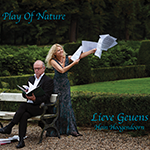
NIEUWE CD IS UIT: PLAY OF NATURE

Play of Nature

€15,00 exclusief verzendkosten
© Copyright - LIEVE GEUENS - powered by Enfold WordPress Theme
  • Link naar LinkedIn Link naar LinkedIn Link naar LinkedIn
  • Link naar Facebook Link naar Facebook Link naar Facebook
Link naar: Hang on to your emotions (song of Lou Reed) Link naar: Hang on to your emotions (song of Lou Reed) Hang on to your emotions (song of Lou Reed) Link naar: The Dancing Diaphragm by Gerrit Bloothooft Link naar: The Dancing Diaphragm by Gerrit Bloothooft The Dancing Diaphragm by Gerrit Bloothooft
Scroll naar bovenzijde Scroll naar bovenzijde Scroll naar bovenzijde
  • Is je stem na een dag werken vermoeid?
  • Heb je het gevoel dat men niet echt naar je luistert?
  • Vind je jezelf niet overtuigd overkomen bij een sollicitatiegesprek?
  • Vind je het als docent moeilijk om overwicht te krijgen op de klas?
  • Ben je niet blij met de kleur van je stem?
  • Heb je het gevoel dat men je niet serieus neem t wanneer jij aan het woord bent?
  • Voel je de energie wegstromen wanneer je een verhaal moet vertellen?

Dan is het écht tijd om een keer heel bewust te onderzoeken hoe jij je stem (en lichaam) inzet om je boodschap over te brengen !

Waar kunnen we aan werken in de lessen/workshops ?

Stem-technieken: Om de stemkwaliteit te verbeteren ( o.a. volume, kleur, helderheid en scherpte, toonhoogte, articulatie…) en om te voorkomen dat je stem gauw vermoeid raakt.

Spreek-technieken: Om de vorm van je betoog te verbeteren (o.a. hoe loopt de zin, zinsmelodie, waar haal je adem, beklemtoning, ritme en tempo, energie-verdeling in de zin…)

Adem-technieken: Om de stem- en spreektechnieken te ondersteunen. Spreken doe je op uitademing. Als de adem niet goed “loopt” dan zal ook de stem minder goed lopen. (o.a. training van ademhaling spieren, oefeningen om natuurlijk en goed te leren ademen, adem- en ontspanningstechnieken,…)

Lichaamshouding: Om de gesproken tekst te ondersteunen en bewust te worden van spierspanningen en spieracties (kinesiologie). 

Presentatie en uitstraling: Om bovenstaande aspecten samen te brengen zodat er congruentie ontstaat. (Ofwel: zijn je gedachten en gevoelens, de betekenis van je woorden, de kleur van je stem en je houding eenduidig ?) …Hoe kom je over? Weet je eigenlijk wel hoe je over komt?

Om je ervan bewust te worden hoe je een boodschap het duidelijkste communiceert. 

Theatertechnieken: 

Zend- en ontvangtechnieken: Om er nog meer bewust van te worden wat je uitzend en om goed te leren omgaan met het “ontvangen” van de boodschap van de ander. (negeren, reageren, incorporeren etc…). 

  • rolpatroon: Om je ervan bewust te worden welke rol je hebt in een gegeven situatie. Je vervult in je leven meerdere rollen; wanneer je bij je ouders bent, ben je het kind, wanneer je voor de klas staat ben je de docent etc. Heb je in een gegeven situatie wel de rol die je wil? Heb je die rol zelf gekozen of is hij je opgelegd ? Hoe stap je in een andere rol die echt bij jou in die situatie past ? Ook hier is congruentie belangrijk: “toneel spelen” zal niet werken…!  Hoe pas je bovenstaande “technieken’ toe om dat te bereiken.

—————————

Hoe werken we samen: De bovenstaande onderdelen vragen om verschillende werkvormen; waaronder: fysieke oefeningen, gesprekstrainingen, geluidsopnames en/of video opnames. 

We spreken een werkplek af waar ik de lessen kom geven of je komt bij mij thuis.

Kosten van individuele lessen:

1 training van een uur: 70 euro ex btw en reiskosten.
5 trainingen van een uur : 300 euro ex btw en reiskosten. 
Ik geef opdrachten mee en onderhoud contact tijdens de periode dat we werken om feedback te kunnen geven.
Bij groepstraining kunnen we overleggen wat de beste werkvormen zijn afhankelijk van het aantal deelnemers.

Workshops
Ik kom met alle plezier een workshop geven, bel of mail mij gerust.
De onderwerpen zouden bijvoorbeeld kunnen zijn:
  • Hoe ontstaat de stem en hoe train ik mijn stem.
Als je weet wat er bij komt kijken om een stem te laten klinken dan wordt het al gauw duidelijk welke spieren er getraind moeten worden. Het instrument leren kennen geeft veel inzicht en helpt je om niet te gauw in paniek te raken wanneer iets niet lukt, maar om oplossingen te bedenken.
 
  • De flexibele klankkast; hoe krijg ik grip op mijn “sound”.
Wil je meer laagte in je stem? Klinken de hoge noten schril en iel? Is je stem te wollig naar jouw smaak? Wil je meer draagkracht ? Is je stem vaak te nasaal?  Na deze workshop hoop ik dat je weet wat je daaraan kan doen !
 
  • Klank en emotie.
Een zanger moet altijd met emotie zingen. De interpretatie van een stuk heeft altijd prioriteit.
In deze workshop leg ik uit wat emoties en interpretatie doen met jouw geluid. Het gebruiken van bepaalde emoties kunnen zelfs de oplossing bieden om jouw sound positief te manipuleren.
 
  • Een algemene workshop.    
Alle deelnemers nemen repertoire mee waar ze op dat moment mee bezig zijn en we werken aan de (technische) aspecten die voorbij komen. Iedereen kan vragen stellen over technische aspecten waar men tegenaan loopt.
 
Wil je meedoen aan een workshop die al gepland staat ?
Kijk dan in mijn agenda wanneer de eerstvolgende is en meld je even aan door te bellen of te mailen.
Lieder-recitals

Liederenrecitals:

U kunt verschillende liederen-recitals boeken:

  • Van Franse/ Franstalige componisten zoals Debussy, Fauré, Satie, Lunssens
  • Van Spaanse componisten zoals De Falla, Sor, Garcia Llorca
  • Van Russische componisten zoals Rachmaninov, Rimsky Korsakov

Ook een combinatie van bovenstaande programma’s is mogelijk.

Opera-recitals

In de theatrale voorstelling “De Ontembare Vrouw” wordt het publiek meegenomen in de ziele roerselen van de vrouw door de eeuwen heen; in prachtige, dramatische en humorvolle aria’s wordt het gedrag van de verliefde vrouw op soms wat karikaturale manier ontleed. In een intieme sfeer wordt het publiek direct betrokken bij de verschillende verhalen.

Lieve zingt aria’s van o.a. Puccini, Mozart, Donizetti, Bellini, Verdi, Gershwin….

Deze voorstelling wordt begeleid door de pianist Hein Hoogendoorn.

De voorstelling wordt momenteel aangeboden door de Stichting “Theater in de kamer” maar is ook op persoonlijke titel te boeken.

  • English
  • Nederlands